Cosmetic brands select shampoo and conditioner packaging by considering several factors together: product formula, bottle material, capacity, dispensing method, consumer experience, and brand positioning. The right packaging should protect the formula, make daily use convenient, and create a consistent appearance across the hair care product range.
For most shampoo and conditioner brands, plastic bottles are a practical option because they offer lightweight construction, flexible designs, and different closure choices. However, a bottle that works well for a lightweight shampoo may not be suitable for a thick conditioner. Brands need to evaluate the actual product before choosing a packaging solution.
As a cosmetic packaging manufacturer, LISSON Packaging provides plastic bottle and pump bottle solutions for personal care and hair care applications. This guide explains what cosmetic brands should consider when selecting shampoo and conditioner packaging and how to find a suitable bottle for their products.
The first step in selecting cosmetic packaging is understanding what will go inside the bottle. Shampoo and conditioner may belong to the same hair care collection, but their formulas often have different textures and dispensing requirements.
Shampoo is generally formulated to spread easily through the hair and rinse away with water. Some shampoos have a relatively thin consistency, while moisturizing, sulfate-free, and professional salon formulas may be thicker. Conditioners are often more viscous because they contain conditioning agents, oils, and other ingredients designed to improve hair softness and manageability.
These differences affect the packaging choice. A thin shampoo may work well with a standard pump, while a thick conditioner may need a larger dispensing opening or a pump designed to handle higher-viscosity products.
Before selecting a bottle, brands should consider:
The actual formula should be tested with the proposed bottle and closure. This helps identify potential issues such as leakage, material changes, pump blockage, or inconsistent dispensing before mass production.
Bottle material affects packaging durability, flexibility, appearance, and compatibility with the product formula. PET, PE, HDPE, and PETG are among the materials that cosmetic brands may consider when developing shampoo and conditioner packaging.
PET bottles: PET is a popular choice for cosmetic packaging because it offers a lightweight and relatively rigid structure. Its clear appearance can display the product color, while different colors and surface finishes can help create a recognizable brand identity. PET bottles are suitable for many personal care applications, including shampoo and conditioner, subject to formula compatibility testing.
PE and HDPE bottles: PE packaging can provide different levels of flexibility depending on the material grade and bottle construction. It is worth considering for brands that prefer squeeze bottles or a more flexible packaging structure. HDPE is commonly used in personal care packaging where a durable, practical bottle is required.
PETG bottles: PETG offers another option for brands looking for a smooth surface and a particular visual appearance. It can be considered for premium cosmetic packaging, depending on the product requirements and bottle design.
There is no universal best material for every shampoo or conditioner. The final selection should consider the actual formula, expected storage conditions, bottle structure, and compatibility test results.
Brands can explore LISSON's plastic cosmetic bottle collection to compare different material options and packaging formats for personal care products.
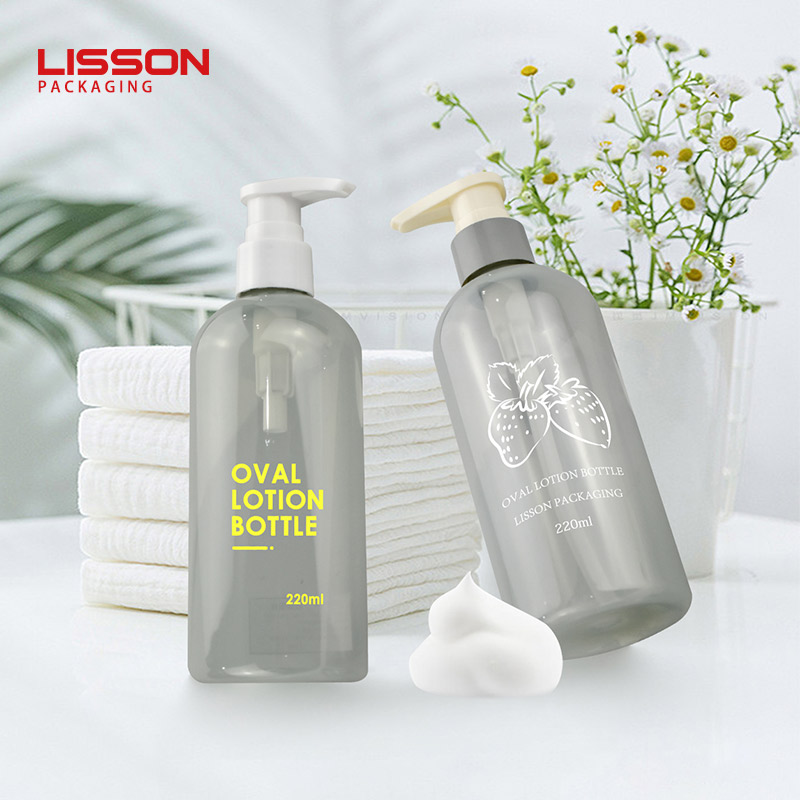
220ml oval plastic pump bottles for hair care and personal care products.
Bottle capacity should reflect how consumers use the product, how frequently they purchase it, and where it will be sold. A travel-size shampoo, an everyday conditioner, and a professional salon product may all require different packaging volumes.
For example, smaller bottles can work well for travel products, trial kits, and compact retail collections. Medium-capacity bottles are suitable for many everyday hair care products, while larger bottles are often considered for family-size packaging and salon use.
The following capacities provide a useful starting point for packaging development:
| Bottle Capacity | Possible Applications | Packaging Considerations |
|---|---|---|
| 100ml–150ml | Travel products and trial kits | Compact size and portability |
| 200ml–250ml | Everyday shampoo and conditioner | Convenient handling and storage |
| 300ml–500ml | Regular retail and family-size products | Capacity, grip, and dispensing efficiency |
| 500ml and above | Salon and professional hair care | Stable base and convenient repeated dispensing |
These are general reference ranges rather than fixed industry standards. The right capacity depends on the target market, retail positioning, product usage frequency, and filling requirements.
For example, LISSON offers a 220ml PET oval conditioner bottle with a PP pump. It is designed for shower gel, shampoo, and hair conditioner applications, making it a useful reference when comparing medium-capacity hair care packaging.
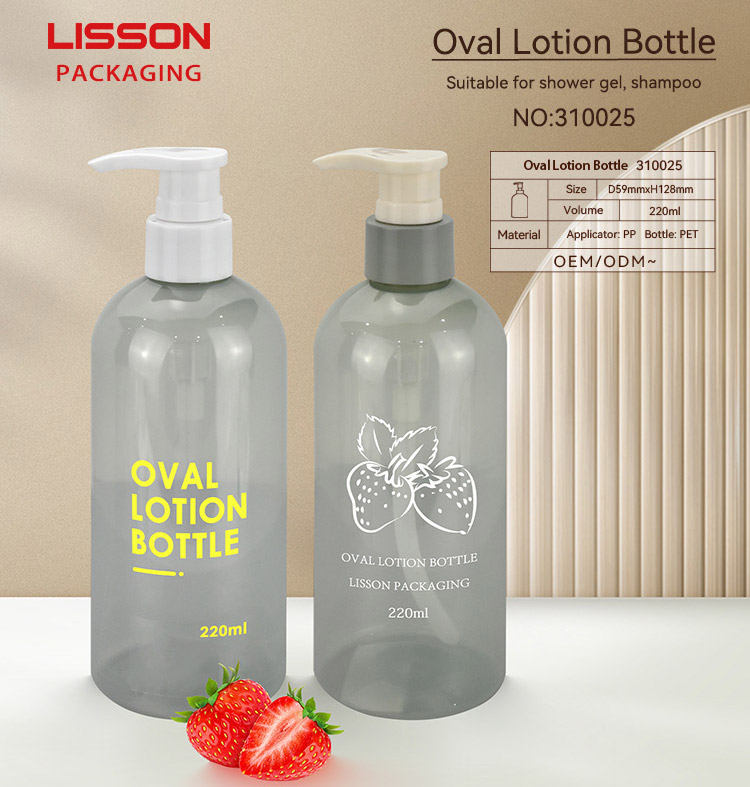
220ml PET oval bottle with pump dispensing system.
The closure is just as important as the bottle itself. It determines how consumers access the shampoo or conditioner and can affect convenience, product waste, and leakage resistance.
Different dispensing systems serve different purposes:
Lotion pumps: Pump bottles are a practical choice for everyday shampoo and conditioner because users can dispense the product with one hand. The pump output, dip tube length, and internal components should be matched to the formula viscosity and bottle dimensions.
Flip-top caps: Flip-top closures provide quick access and are often considered for squeeze bottles. They can work well for products that consumers dispense by turning or squeezing the container.
Screw caps: Screw caps provide a straightforward closure structure and can be useful for packaging that needs a simple opening and closing mechanism.
Spray pumps: Spray-style dispensing systems may be suitable for selected hair care liquids and treatments. They should not automatically be used for thick conditioners, as the formula may not pass through the dispensing mechanism properly.
When choosing a pump bottle, brands should check the dosage per press, dispensing smoothness, pump recovery, closure fit, and leakage performance. A pump that works with a thin shampoo may not deliver a thick conditioner effectively.
LISSON provides different cosmetic pump bottle packaging options for personal care applications, including shampoo and lotion packaging.
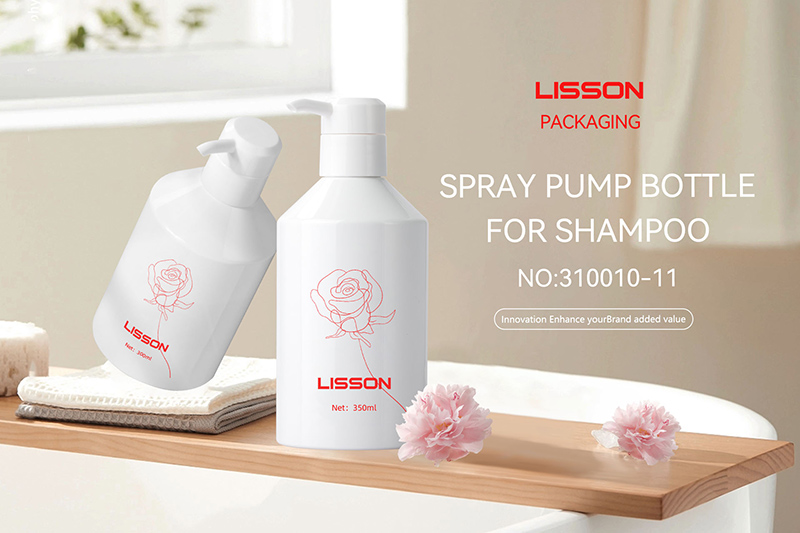
LISSON 300ml and 350ml shampoo bottle packaging with pump heads.
Shampoo and conditioner bottles are handled frequently, often with wet hands. Their shape should therefore be practical, comfortable to hold, and easy to use in a bathroom or shower environment.
Round bottles are familiar and easy to integrate into many product lines. Oval bottles can provide a comfortable grip while maintaining a relatively slim profile. Square bottles create a more structured appearance and can help products stand out on retail shelves.
Brands should also consider the bottle's base stability, shoulder design, opening position, and overall dimensions. A tall bottle with a narrow base may look attractive, but it should remain stable when placed on a bathroom counter. A wide bottle may offer a larger labeling area but could take up more shelf space.
The packaging should also be easy to store, transport, and use until the product is finished. These practical details are worth checking during sample evaluation rather than relying on appearance alone.
Packaging is one of the first things consumers notice when comparing shampoo and conditioner products. Bottle color, surface finish, shape, and logo placement all contribute to the overall brand image.
For brands developing a shampoo and conditioner collection, using a consistent design language can make the product range easier to recognize. For example, both products can share the same bottle shape and color while using different capacities, pump colors, or label designs to distinguish their functions.
Common customization options include:
The decoration method should be selected according to the bottle material, design artwork, production quantity, and desired appearance. Brands should also confirm that labels and printing remain intact during normal handling and exposure to bathroom conditions.
For brands that need more than an existing bottle design, LISSON provides custom cosmetic bottle design and packaging services, covering bottle profiles, colors, surface treatments, printing, and closure selection.
A packaging sample may look suitable, but that does not necessarily mean it will perform well with the actual shampoo or conditioner formula. Testing is an important step before approving a large production order.
Brands should fill the sample bottle with their intended product and evaluate the complete packaging system. This includes the bottle body, pump or cap, sealing components, and dispensing performance.
A practical sample evaluation should include:
For international orders, transportation testing is also worth considering. Packaging may experience vibration, stacking pressure, and temperature changes during shipping. Testing under realistic conditions helps brands identify potential problems before products reach distributors or retailers.
LISSON supports cosmetic packaging projects through sample development, bottle customization, and mass production. Brands can discuss their packaging requirements and evaluate suitable options before moving forward with an order.
What is the best packaging material for shampoo and conditioner bottles?
PET, PE, HDPE, and PETG are all potential materials for shampoo and conditioner packaging. PET is often selected for its rigid structure and clear appearance, while PE and HDPE can be considered when different flexibility or durability requirements are involved. The final choice should depend on the actual formula and compatibility testing.
What bottle capacity is suitable for shampoo and conditioner?
The suitable capacity depends on the product's intended market and usage frequency. Smaller bottles are useful for travel and trial products, while 200ml–500ml bottles are common options to consider for everyday retail hair care products. Larger capacities may be more appropriate for family-size and professional salon products.
Are pump bottles suitable for thick conditioner?
Yes, provided the pump is designed to handle the formula's viscosity. Brands should test the pump output, dip tube, internal components, and dispensing performance with the actual conditioner before confirming the packaging design.
Can shampoo and conditioner bottles be customized?
Yes. Depending on the bottle design and manufacturing requirements, brands can customize bottle colors, shapes, capacities, surface finishes, logo printing, and pump or cap configurations. These options help create consistent packaging across different hair care products.
What should brands check before ordering shampoo bottles in bulk?
Brands should confirm material compatibility, bottle dimensions, dispensing performance, closure fit, leakage resistance, decoration quality, and filling-line suitability. Testing samples with the actual formula before mass production is strongly recommended.
Can one bottle design be used for both shampoo and conditioner?
Yes. Some brands use the same bottle shape for both products to maintain a consistent product appearance. However, the pump or closure should still be checked separately because shampoo and conditioner may have different viscosities and dispensing requirements.
Selecting shampoo and conditioner packaging involves more than choosing a bottle that looks attractive. Brands need to consider formula compatibility, material, capacity, dispensing performance, consumer convenience, and customization requirements together.
A suitable packaging solution should work with the actual product, support the brand's visual identity, and meet the practical requirements of filling, storage, and transportation.
LISSON Packaging provides plastic cosmetic bottles, pump bottles, and customized packaging solutions for hair care and personal care brands. Whether you are developing a new shampoo collection, upgrading conditioner packaging, or sourcing bottles for an existing product line, our team can help you explore suitable packaging options.
Contact LISSON Packaging to discuss your bottle capacity, material, pump selection, and customization requirements for your next hair care packaging project.